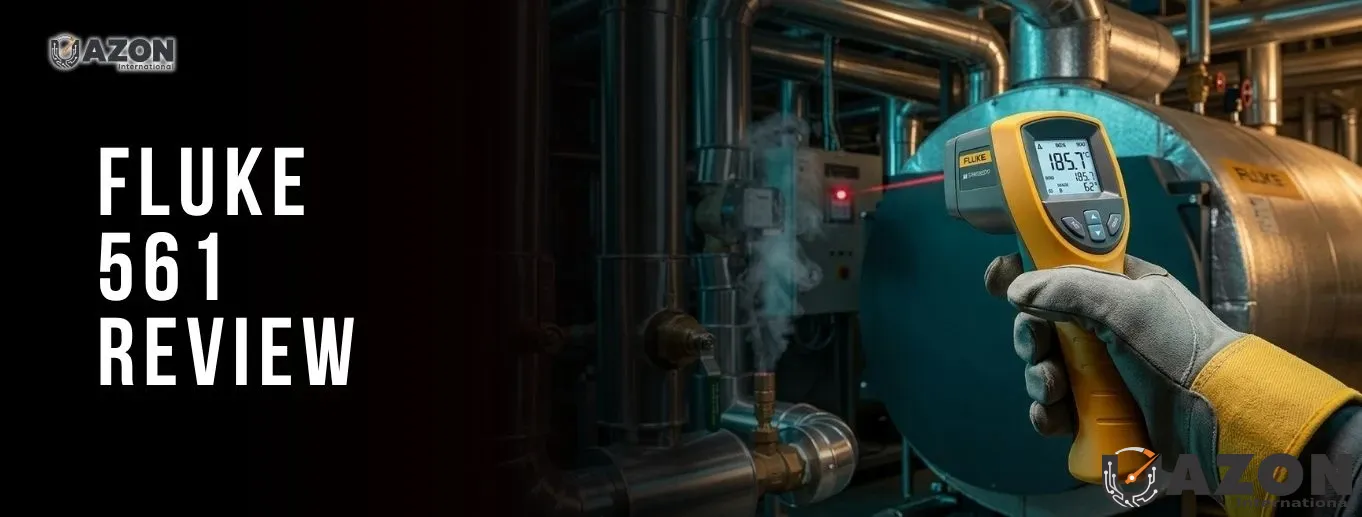
Fluke 561 Infrared and Contact Thermometer Review
Table of ContentsThe Fluke 561 Advantage: Bridging the Gap Between Surface and Pipe Diagnostics
When IR alone isn't enough: A closer look at why the Fluke 561 remains a staple for HVAC field technicians.
Beyond the Surface
In the field, thermal management is rarely a single-variable problem. While infrared (IR) thermometers are excellent for quick spot-checks on ductwork or electrical panels, they often fail when you need to validate the internal fluid temperature of a pipe. This is where the Fluke 561 distinguishes itself.
By blending an infrared thermometer with a dedicated K-type thermocouple input, it solves a common workflow bottleneck: switching between tools to verify that the temperature readings you're getting from a wall or duct align with the actual conditions inside the system.
Why Technicians Value the Hybrid Approach
The Fluke 561 doesn't try to be an over-engineered lab instrument; it focuses on field practicality:
- Velcro Pipe Probe Integration: A simple yet critical inclusion that allows for stable, hands-free pipe temperature monitoring.
- Versatile Optics: The 12:1 distance-to-spot ratio is perfectly balanced for common mechanical rooms where you aren't working from 50 feet away, but need to stay out of the immediate danger zone.
- In-Field Reliability: It manages the transition from cold storage to hot mechanical environments without the constant re-calibration headaches associated with cheaper sensors.
Technical Breakdown
| Temperature Range (IR) | -40°C to 550°C |
| Thermocouple Input | Standard K-type mini connector |
| Accuracy | ±1% or ±1°C (Environment dependent) |
| Display Features | Min/Max/Dif & Backlit LCD |
Is It the Right Tool for Your Kit?
If you are strictly doing building inspections, a basic IR gun might suffice. However, for those tasked with HVAC/R balancing, motor diagnostics, or boiler pipe verification, the Fluke 561’s ability to confirm surface readings against contact-based measurements makes it an essential tool. It reduces guesswork and accelerates the troubleshooting loop.