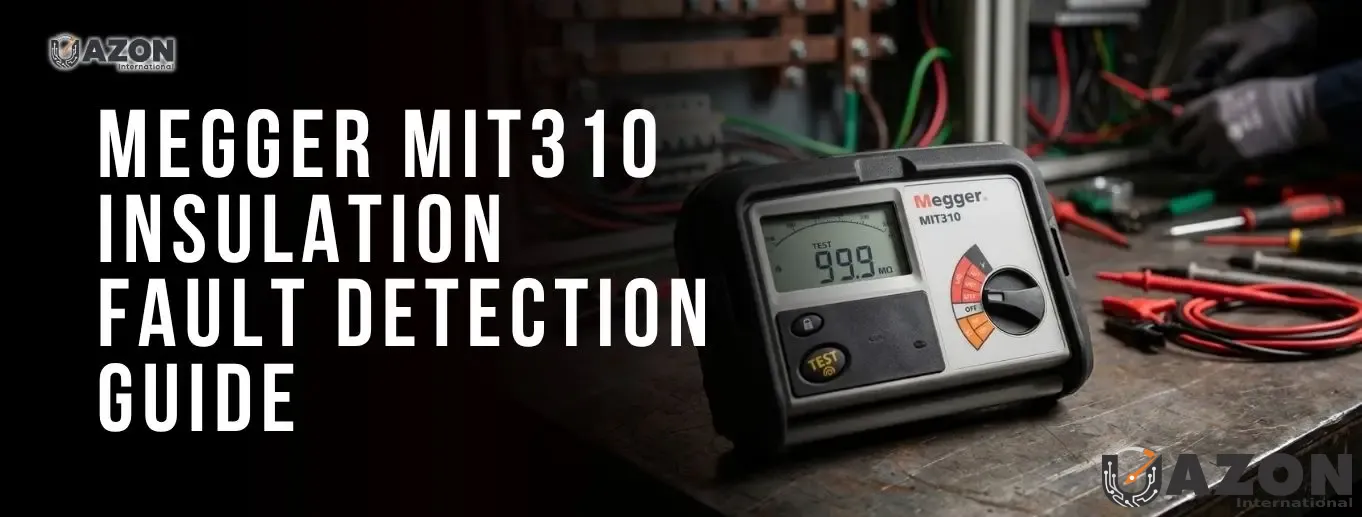
Megger MIT310: Insulation Fault Detection & Testing Guide
Table of ContentsWhy Insulation Problems Occur in Electrical Systems
Electrical insulation is designed to isolate conductors and prevent current leakage. However, insulation materials gradually degrade due to environmental conditions and operational stress.
- Moisture entering cables or equipment
- High operating temperatures
- Mechanical damage during installation
- Dust or chemical contamination
- Aging insulation materials
When insulation resistance drops below acceptable levels, leakage currents may occur. These conditions increase the risk of short circuits, electrical fires, and equipment damage.
How Electricians Identify Insulation Faults
To evaluate insulation condition, technicians apply a DC test voltage to the insulation and measure resistance. This process is known as insulation resistance testing and is widely used during electrical inspections and maintenance procedures.
If the insulation resistance value is low, it usually indicates moisture, contamination, or damaged insulation.
Using the Megger MIT310 for Insulation Fault Detection
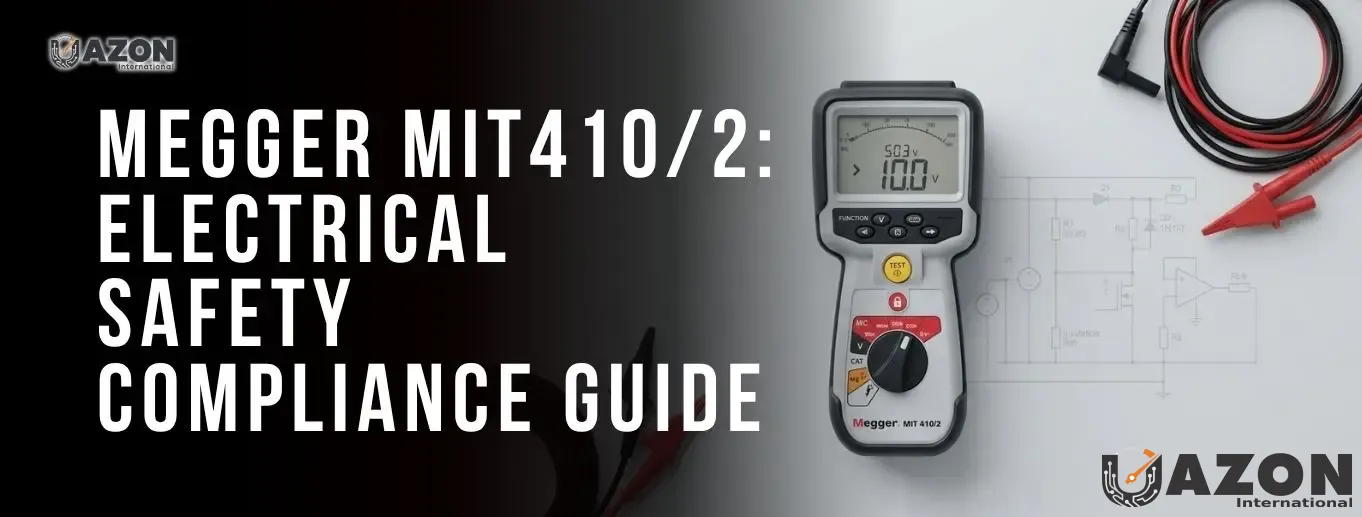
The Megger MIT310 insulation and continuity tester is designed to help electricians evaluate insulation condition quickly and safely in the field.
The instrument offers three insulation test voltages, allowing technicians to test different types of equipment and installations.
| Test Voltage | Typical Use |
|---|---|
| 250 V | Sensitive electronic circuits |
| 500 V | General electrical wiring |
| 1000 V | Motors and industrial cables |
Typical Insulation Test Results
Interpreting insulation resistance readings is an important part of electrical diagnostics.
| Resistance Reading | Condition |
|---|---|
| Above 100 MΩ | Excellent insulation condition |
| 10 MΩ – 100 MΩ | Acceptable but should be monitored |
| Below 10 MΩ | Possible insulation deterioration |
Additional Testing with the MIT310
In addition to insulation resistance measurement, the Megger MIT310 also supports continuity testing. This allows electricians to verify protective conductors and electrical connections.
The continuity buzzer activates when resistance is below 5 Ω, helping technicians quickly confirm proper electrical bonding.
Key Specifications of the Megger MIT310
| Parameter | Specification |
|---|---|
| Insulation Test Voltages | 250 V, 500 V, 1000 V DC |
| Insulation Resistance Range | 10 kΩ – 999 MΩ |
| Continuity Range | 0.01 Ω – 99.9 Ω |
| Voltage Measurement | 0 – 600 V AC/DC |
| Safety Category | CAT III 600 V |
| Environmental Protection | IP54 |
Where Insulation Fault Detection Is Important
- Electrical installation inspection
- Motor maintenance
- Cable testing
- Switchgear servicing
- Industrial equipment maintenance
- Commercial building electrical systems
Conclusion
Insulation deterioration can cause serious electrical problems if it is not detected early. Routine insulation resistance testing allows electricians to identify hidden insulation faults and prevent equipment failure.
With multiple test voltages, continuity testing capability, and robust field design, the Megger MIT310 is a practical instrument for detecting insulation problems in electrical systems and supporting safe maintenance practices.