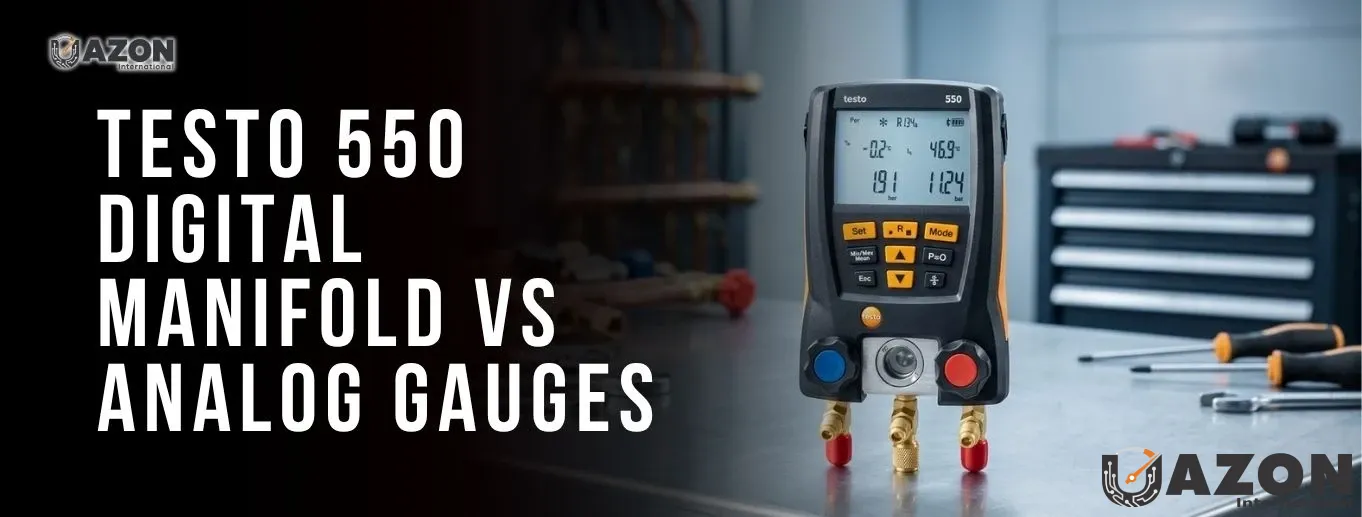
Digital vs Analog Manifold Gauges: Why HVAC Technicians Prefer the Testo 550
Table of ContentsManifold gauges are essential tools for HVAC technicians working with refrigeration systems, air conditioners, and heat pumps. They allow professionals to measure system pressure, evaluate refrigerant conditions, and diagnose operational problems.
For decades, analog manifold gauges were the standard tool used in refrigeration service. However, modern digital manifold gauges are increasingly replacing them because they provide higher accuracy, automatic calculations, and easier data interpretation.
Understanding the differences between these two types of gauges helps technicians choose the right tool for faster and more reliable HVAC diagnostics.
Analog manifold gauges rely on mechanical pressure readings and manual interpretation. Digital manifold gauges use electronic sensors and internal software to calculate important parameters such as superheat and subcooling automatically.
What Is a Manifold Gauge in HVAC?
A manifold gauge set is used to measure pressure on both the high‑pressure and low‑pressure sides of a refrigeration system. HVAC technicians use this information to evaluate system performance, detect refrigerant leaks, and properly charge systems with refrigerant.
Typical manifold gauges connect to a system through hoses attached to service ports. By reading pressure values and comparing them with temperature measurements, technicians can determine whether the refrigerant charge is correct.
Analog Manifold Gauges
Analog gauges use mechanical pressure sensors connected to needle indicators on a dial. Technicians read the pressure values directly from the dial and then interpret those readings using pressure‑temperature charts.
Advantages of Analog Gauges
- Simple mechanical design
- Lower initial cost
- No batteries required
- Durable in many working environments
Limitations of Analog Gauges
- Manual calculations for superheat and subcooling
- Potential reading errors due to parallax
- Limited refrigerant compatibility on the dial
- No data logging or wireless connectivity
While analog gauges remain widely used, modern refrigeration systems require more precise diagnostics and faster service procedures.
Digital Manifold Gauges
Digital manifold gauges use electronic pressure sensors and integrated software to measure and analyze HVAC system performance. Instead of reading a mechanical dial, technicians view accurate digital values on a display.
Many digital gauges also calculate critical refrigeration parameters automatically, eliminating the need for manual pressure‑temperature conversions.
Main Advantages of Digital Manifolds
- High‑precision electronic pressure measurement
- Automatic superheat and subcooling calculation
- Support for multiple refrigerants
- Digital display for easier readings
- Wireless connectivity and reporting in advanced models
Digital manifold gauges reduce calculation errors that commonly occur when technicians rely only on pressure readings. By combining pressure and temperature measurements, they provide a clearer picture of system performance.
Digital vs Analog Manifold Gauges
| Feature | Analog Gauge | Digital Gauge |
|---|---|---|
| Pressure Reading | Mechanical dial | Electronic sensor with digital display |
| Superheat/Subcooling | Manual calculation | Automatic calculation |
| Accuracy | Moderate | High precision |
| Refrigerant Support | Limited on dial scale | Multiple refrigerant profiles |
| Data Recording | No | Possible on advanced models |
| Connectivity | None | Bluetooth or mobile integration |
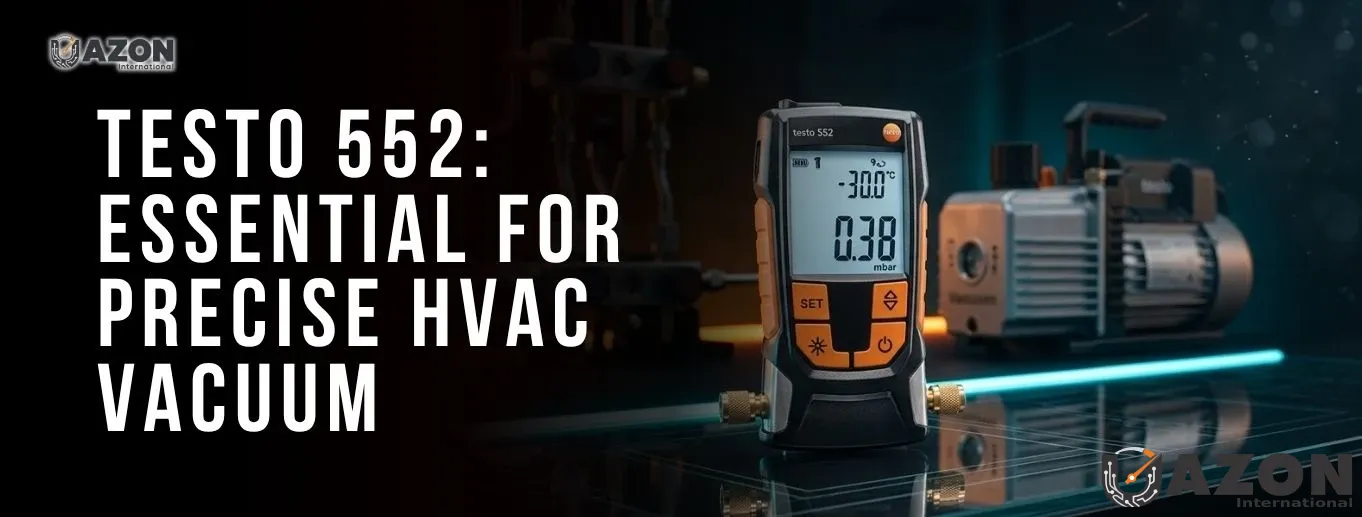
Example of a Modern Digital Manifold: Testo 550
One example of a modern digital manifold gauge is the Testo 550, designed for commissioning and servicing refrigeration systems and heat pumps.
This instrument combines pressure measurement, temperature measurement, and automatic refrigerant calculations within a compact handheld device.
Main Features
- Pressure measurement range from -1 to 60 bar
- Automatic superheat and subcooling calculation
- Support for approximately 60 refrigerants
- Bluetooth connectivity for mobile monitoring
- Temperature measurement from -50 °C to +150 °C
- Battery life up to 250 hours
- Robust housing designed for field work
These capabilities make digital manifolds especially useful for technicians who need accurate diagnostics and faster workflow during HVAC service operations.
When Should Technicians Upgrade to Digital Gauges?
Upgrading to a digital manifold gauge can significantly improve service efficiency in modern HVAC systems. Technicians who frequently work with different refrigerants, perform system commissioning, or require precise diagnostics may benefit from digital measurement technology.
Automatic calculations, clear digital displays, and wireless connectivity can reduce the time needed to evaluate refrigeration systems and help avoid common service errors.
Conclusion
Both analog and digital manifold gauges can measure system pressure, but digital tools provide additional capabilities that simplify HVAC diagnostics. Automatic calculations, improved accuracy, and digital displays make them particularly useful for modern refrigeration systems.
For technicians looking to improve efficiency and measurement accuracy, upgrading from traditional analog gauges to a digital manifold gauge can be a practical step toward more reliable HVAC service.