
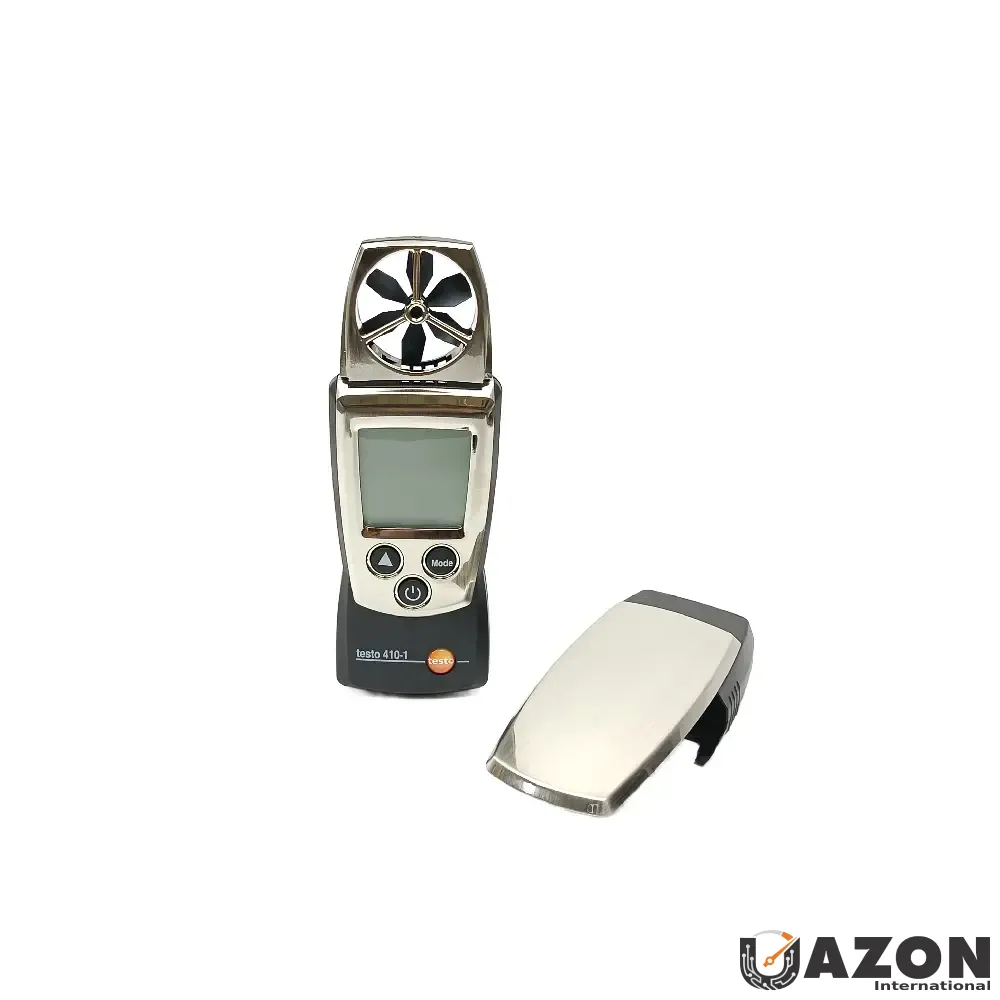
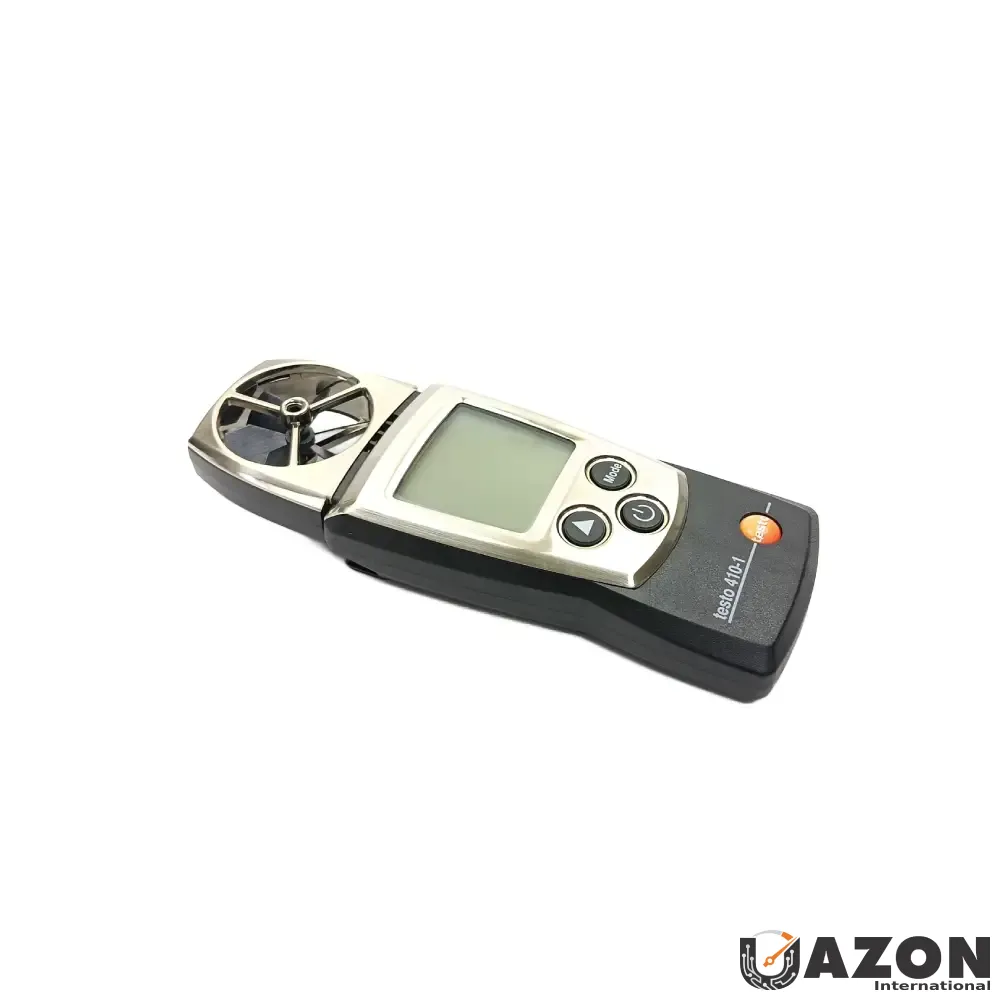
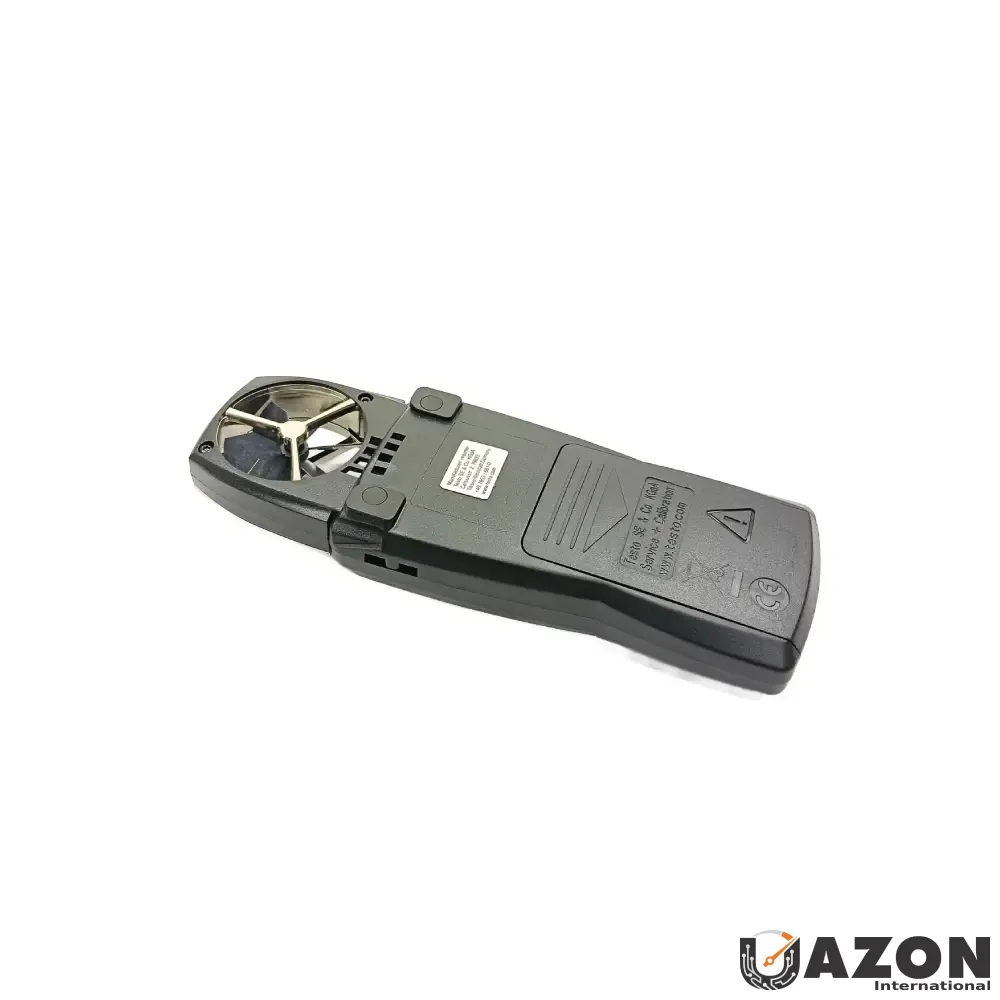





Description
About this model
Why the Testo 410-1 Vane Anemometer Is the First Choice for Quick Air Velocity Checks
When HVAC inspections, commissioning, or comfort audits fall behind schedule, the culprit is almost always a sluggish measurement tool. The Testo 410-1 vane anemometer was engineered to eliminate that bottleneck. It combines a 30 mm vane sensor, a pocket-size housing, and on-device wind-chill calculation so you can verify airflow, temperature, and perceived cooling in a single pass. Facility managers, marine surveyors, and building-commissioning agents who buy Testo 410-1 consistently report shorter job times and fewer call-backs because the instrument delivers repeatable readings without set-up delays.
Technical Features and Field Applications of the Testo 410-1 (0560 4101)
Every specification inside the 0560 4101 has a direct, money-saving application on site. The ultra-light 2.5 oz frame clips to a belt loop, while the shock-resistant ABS shell survives drops from two meters. In other words, the anemometer is always within reach, even on ladders or scaffoldings.
- Integrated 30 mm vane eliminates alignment errors common with larger, detachable probes
- 0.4–20 m/s velocity span captures everything from near-stall kitchen hoods to high-speed duct mains
- Simultaneous display of air velocity, air temperature, Beaufort scale, and wind-chill reduces mental math and note-taking
- Back-lit LCD flips 180° so numbers remain visible when the grille is overhead or behind machinery
- Auto-off after 10 min preserves battery life during long commissioning days
How Pocket-Size Design Translates to Real-World Productivity
Traditional anemometers force you to carry a separate case, extension rod, and probe cable. The Testo 410-1 combines all three into a 155 mm fold-out package that fits beside your smartphone. That matters when you are balancing on a lift 12 ft above a clean-room ceiling or walking a roof to verify fume-exhaust speed. One-hand operation leaves the other hand free for safety rails or clipboards, cutting average measurement time per grille from four minutes to under 60 seconds.
Outdoor Versatility: Wind Chill and Beaufort Readings for Safety Audits
Outdoor contractors often juggle a separate weather station and thermometer to satisfy OSHA heat-stress or maritime wind-load protocols. The Testo 410-1 instantly computes wind-chill temperature so crews can decide whether it is safe to continue crane lifts or exterior spray work. The built-in Beaufort scale indicator also helps roofing supervisors document gust conditions for insurance files, eliminating guess-work and post-storm disputes.
Accuracy, Calibration, and Repeatability in High-Stakes Environments
With ±(0.2 m/s + 2 % of reading) accuracy, the 410-1 meets ISO 7730 comfort verification, ASHRAE 111 duct traversing, and EN 12599 building-test standards. The factory NIST traceability certificate is included at no extra charge, so you can submit compliance paperwork the same day. Because the vane is fixed, there is no coupling wear that typically drifts after 12 months, delivering stable calibration for up to 24 months under normal field rotation schedules.
Comparing 0560 4101 Price and Value Against Hot-Wire Alternatives
Hot-wire anemometers promise slightly lower starting speeds, yet they carry a hidden cost: fragile sensors that fracture when struck by airborne debris and require $150 probes every season. The Testo 410-1's durable ABS vane withstands dust, pollen, and even light metal shavings typical of manufacturing plants. Over a three-year ownership cycle, total cost including two recalibrations is roughly half that of entry-level hot-wire kits, making the Testo 410-1 best price proposition for budget-conscious maintenance departments.
Step-by-Step Guide: How to Measure at Grilles and Diffusers
Correct placement is critical if you want repeatable readings that stand up in court or arbitration. Follow these steps to leverage the 410-1's 30 mm vane diameter and built-in temperature compensation.
- Record grille free-area dimensions and divide into equal rectangles no smaller than the 30 mm vane.
- Set the hold function; insert the vane one duct diameter into the face to avoid jet effects.
- Take three point-velocity readings per rectangle; average them on-site using the 410-1 min-max feature