



Description
About this model
Precise Airflow Tracking: Why the Testo 0635 2345 Stainless Steel Pitot Tube Leads the Field
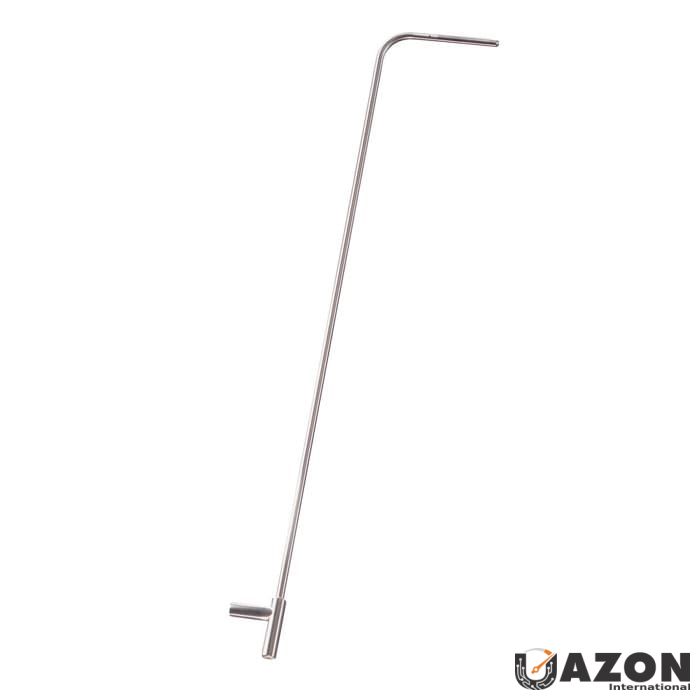
Pitot tubes have long been the reference standard for differential-pressure airflow measurement, but not every probe survives modern industrial conditions. The Testo 0635 2345 Stainless Steel Pitot Tube was engineered for technicians who need repeatable, high-speed readings inside corrosive ducts, high-temperature exhaust stacks, and sterile cleanrooms. If your task demands both laboratory-grade accuracy and jobsite durability, upgrading to this 1,000 mm probe is the fastest way to eliminate costly callbacks and measurement drift.
Forged for Harsh Environments: Material Strength and Temperature Tolerance
Every component that contacts the airstream is 316 stainless steel, providing superior resistance to chloride pitting, oxidation, and chemical wipe-downs. The one-piece construction removes the joints that typically leak or break under vibration, while the polished surface limits contaminant buildup required in FDA-regulated spaces. From -40 °F cold-storage ducts to 400 °F bakery exhausts, the probe retains dimensional stability so your velocity factors remain constant.
High-Velocity Readings With Minimal Flow Interruption with 0635 2345
Fast air streams punish low-quality sensors with turbulence-induced pressure fluctuations. Testo’s hemispherical nose tip and 7 mm outer diameter straighten the incoming airflow, cutting pressure ripple by up to 18 % compared with standard 10 mm probes. The result is a cleaner ΔP signal, steadier digital display, and fewer averaging cycles. Whether you are commissioning a 4,000 fpm laboratory duct or troubleshooting a 6,000 fpm pneumatic conveyance line, you can trust the first reading you see.
Extended Reach for Deep or Insulated Duct Systems
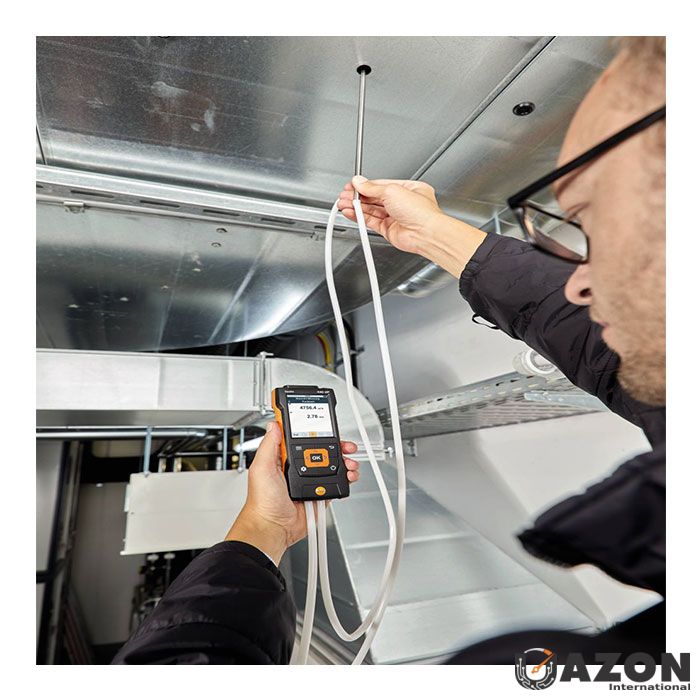
Many HVAC and industrial pipes are buried above T-bar ceilings or wrapped in three inches of insulation. The 1,000 mm (39") shaft slides past internal baffles and dampers without requiring additional access ports. A laser-etched depth scale every 50 mm lets you document the exact traverse point, ensuring your logbooks satisfy ASHRAE 111, ISO 3966, and EPA Stack Test Method 2 guidelines.
Technical Features and Field Applications of the Testo 0635 2345
Below are the critical specifications translated into practical advantages you will notice on the very first job. Each bullet links a design choice to a measurable benefit, so you can justify the purchase to your supervisor or client in terms of time saved, liability avoided, or energy recovered.
- 5-degree sensing head angle maintains true total-pressure capture within ±1 % for velocities 600–12,000 fpm
- 1.2 mm wall thickness withstands 100 psi accidental back-pressure events common in variable-air-volume boxes
- Corrosion-resistant 316 SS construction meets NACE MR0175, allowing use in coastal or chemical plants without probe replacement
- 7 mm diameter keeps blockage ratio under 4 % in 6" ducts, eliminating the need for blockage corrections
- 1,000 mm insertion length reduces the need for multiple probe extensions that accumulate tolerance errors
- Universal brass compression fitting mates with Testo 510, 512, 521, 535, and 635 instruments, plus any manometer accepting 6 mm OD tubing
- Laser-etched depth marks visible with gloves and in poor lighting, preventing parallax mistakes during timed traverse
HVAC Commissioning and TAB Accuracy You Can Defend
When balancing a rooftop unit, even a 3 % velocity error propagates into a 7 % fan-power miscalculation under the new ASHRAE 90.1 provisions. The Testo 0635 2345 removes that risk by delivering ±1 % repeatability, ensuring your final report matches the installed performance. Contractors report trimming up to two return visits per project because initial airflow readings no longer drift overnight.
Cleanroom and Pharmaceutical Compliance in a Single Tool
FDA auditors focus on documented evidence that critical airflow stays within ±5 % of design. The stainless surface can be sterilized with alcohol, hydrogen peroxide fog, or IPA wipes without pitting, so you avoid particle shedding that would violate ISO 14644-1 limits. Combine the probe with Testo 521 or 535 electronics for a validatable system that supports 21 CFR Part 11 electronic records.