
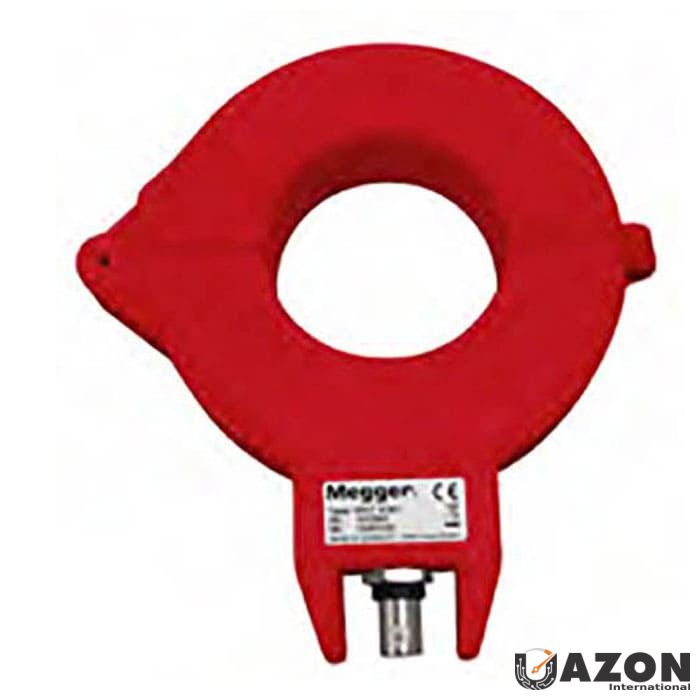



Description
About this model
Understanding The Role Of High-Frequency Current Transformers In Modern Grids
Partial discharge (PD) monitoring is a critical aspect of predictive maintenance for electrical infrastructure, ranging from medium voltage (MV) systems to extra high voltage (EHV) applications. When insulation degrades within cables, transformers, or switchgear, it often releases small, high-frequency electrical pulses. Detecting these pulses early allows utilities and engineers to address potential failures before they escalate into costly outages. High-Frequency Current Transformers (HFCT) are the primary tools used to capture these transient signals with precision and reliability.
Unlike traditional current transformers that measure power frequency loads, HFCT sensors are specifically engineered to decouple high-frequency PD signals from the ground path. The Megger HFCT series represents a significant advancement in this field, offering robust sensing capabilities designed for harsh industrial environments. By clamping around the earth connection of cable accessories or screen bonds, these sensors facilitate accurate signal extraction without requiring direct electrical contact with the high-voltage conductor.
Technical Features And Field Applications Of Megger HFCT Sensors
The effectiveness of a PD monitoring system relies heavily on the sensitivity and bandwidth of its sensors. Megger HFCT sensors are designed to meet these demands, providing a versatile solution for both permanent installations and temporary diagnostic campaigns. These devices play a pivotal role in extending the lifespan of electrical assets by identifying insulation defects at an early stage.
Megger offers two primary configurations to address different operational requirements: permanent clamp-on designs and split-core models. Understanding the distinct advantages of each type is essential for selecting the best price-to-performance ratio for your specific application. Below, we explore the detailed specifications and practical benefits of these sensors.
Permanent HFCT Sensors For Continuous Monitoring
Permanent HFCT sensors are engineered for scenarios where continuous, online monitoring is non-negotiable. These installations are invaluable for critical assets where operational downtime is rare or difficult to schedule, such as substation feeders or primary distribution cables. By integrating permanent sensors, utilities can perform seamless PD monitoring without the need for power outages, thereby minimizing disruption to service.
The permanent sensor design clamps securely around the cable earth screen or accessory earth connection. Once installed, it provides a continuous data stream that can be analyzed for trending PD activity. This proactive approach allows maintenance teams to schedule interventions during planned windows rather than reacting to catastrophic failures. When looking to buy permanent solutions, the reliability of the clamp mechanism and long-term stability of the transfer impedance are critical factors to consider.
Split-Core HFCT Sensors For Flexible Diagnostics
Split-core HFCT sensors offer a different set of advantages, primarily focusing on flexibility and convenience for spot-testing scenarios. These sensors are designed to be easily applied and removed, making them ideal for temporary diagnostics where direct access to the earth screen is available. They are commonly used during commissioning tests or investigative surveys where intermittent PD issues are reported.
While split-core HFCTs can be used within switchgear cabinets, safety protocols typically require a power outage to ensure the safety of personnel during installation and operation. This trade-off allows for high-precision measurements in controlled conditions. For engineers debating the Megger HFCT price for temporary versus permanent setups, the split-core option provides a cost-effective solution for multi-site surveys where a single set of sensors can be moved between assets.
Frequency Range And Signal Fidelity Specifications
The frequency response of an HFCT sensor determines its ability to capture specific types of partial discharge signals. A broad bandwidth ensures that both low-frequency and high-frequency transients are accurately represented. Megger HFCT sensors are calibrated to offer a flat response across critical bands, ensuring that no vital diagnostic data is lost due to sensor limitations.
The specific frequency ranges for the Megger models are designed to cover the most common PD signatures found in MV and HV assets. When evaluating the Buy Megger HFCT options, understanding these ranges helps in matching the sensor to the specific asset type.
- HFFCT 20: 100 kHz – 150 MHz (-3 dB)
- HFCT SC40: 100 kHz – 20 MHz (-3 dB)
- HFCT SC60: 100 kHz – 20 MHz (-3 dB)