




Description
About this model
What Is the Fluke 805ES External Vibration Sensor Used For?
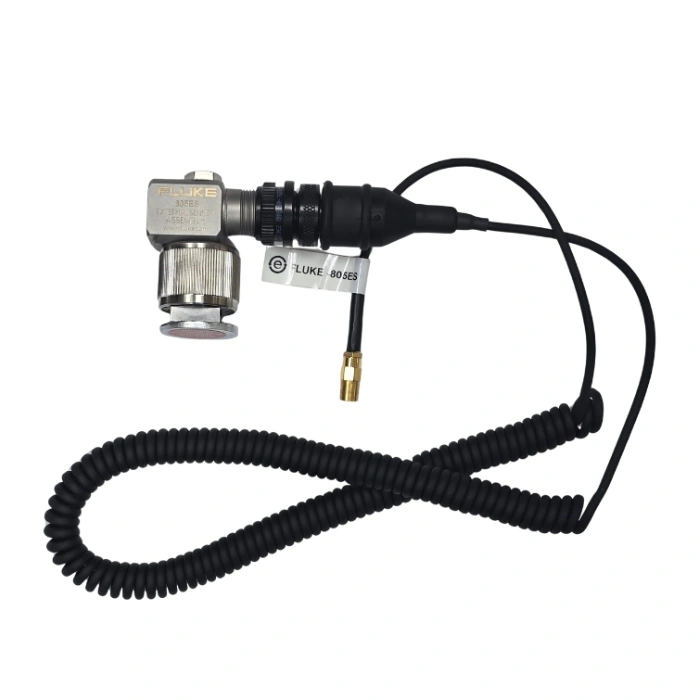
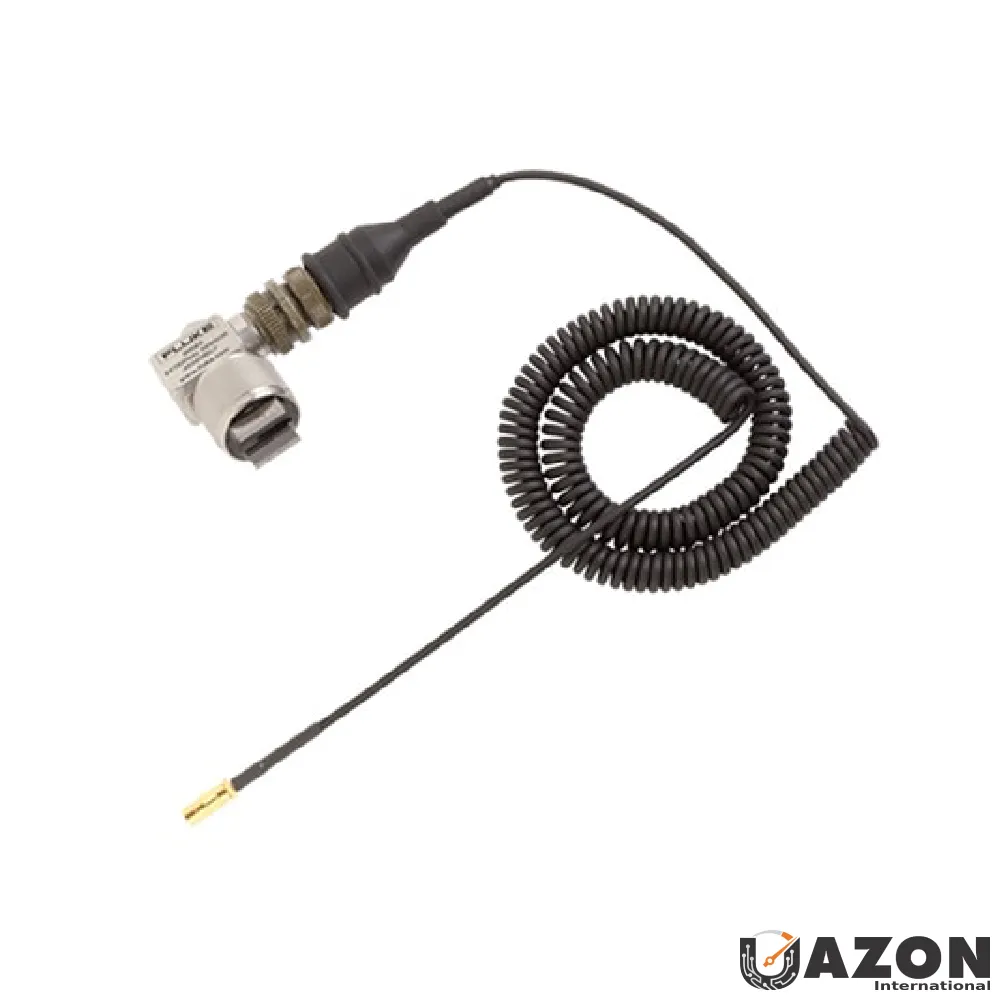
The Fluke 805ES is a low-profile external vibration sensor designed for Fluke 805 and 805 FC meters. Featuring a 90-degree head, heavy-duty U-channel magnet, and 7-foot coiled cable, it delivers reliable 10 Hz to 1,000 Hz overall machine vibration screening in awkward, confined mechanical spaces.
Why Use the Fluke 805ES External Vibration Sensor for Machine Screening?
Industrial maintenance teams frequently encounter machinery where standard handheld vibration meters cannot seat properly against the test point. Tight safety screens, narrow bearing housings, and close pipe runs restrict physical access. The Fluke 805ES external accelerometer solves this limitation by extending the measurement point into awkward mechanical locations without compromising signal integrity.
Fluke 805ES Vibration Meter Probe Features and Measurement Advantages
Connecting the Fluke 805ES external accelerometer to your testing routine provides several distinct engineering benefits:
- Operator Safety Behind Machine Guards: Capture accurate machine screening data while hands and arms remain outside hazardous moving equipment envelopes.
- Repeatable Magnetic Seating: The dedicated U-shaped rare-earth magnet eliminates hand-angle and pressure variations across routine inspection routes.
- Heavy-Duty Coiled Cable Reach: A tough, oil-resistant 7-foot coiled industrial cable stretches smoothly to hard-to-reach bearing locations and retracts without tangling.
- Dual Mounting Configuration: Use the magnetic base for quick spot checks or unscrew it to utilize the threaded mounting stud for direct mechanical coupling.
Fluke 805ES Compatibility with Fluke 805 and 805 FC Vibration Meters
The Fluke 805ES external vibration sensor connects directly to the bottom SMB input port of both the Fluke 805 and Fluke 805 FC vibration meters. When connected, the meter automatically powers the internal IEPE piezoelectric sensor circuit, enabling immediate overall vibration screening across acceleration, velocity, and displacement metrics without external batteries or signal conditioners.