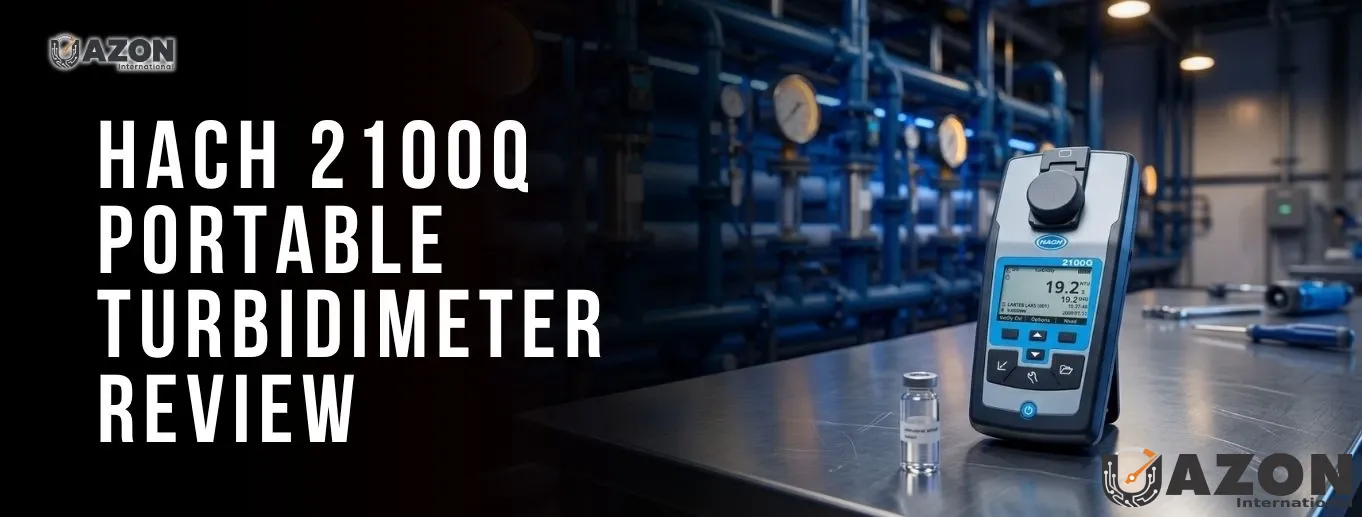
Hach 2100Q Portable Turbidimeter Review & Specs
Table of ContentsHach 2100Q Portable Turbidimeter: The Definitive Guide to Field Accuracy
From EPA compliance to advanced optical engineering, we explore why the Hach 2100Q is the industry benchmark for water quality professionals.
Quick Verdict: Why Choose 2100Q?
The Hach 2100Q is not just a field meter; it is a laboratory-grade analytical tool built for the rigors of field use. With its proprietary Rapidcal™ technology and EPA Method 180.1 compliance, it minimizes human error and maximizes regulatory audit readiness. For municipal water plants and industrial QA/QC labs, it is the safest investment for long-term turbidity monitoring.
The Science Behind Hach 2100Q: Understanding Nephelometry
Turbidity is often misunderstood as simply "how dirty water looks." However, at a regulatory level, it is a measure of light scattering. The Hach 2100Q operates on the Nephelometric principle, utilizing a two-detector optical system. This sophisticated engineering allows the device to compensate for sample color and stray light, ensuring that your reading is based solely on the suspended particulates in the water.

Unlike cheaper portable meters, the 2100Q uses a high-intensity light source and precise detectors to ensure that you get consistent results, whether you are testing raw influent or finished drinking water.
Advanced Key Features
Expert Tips for Optical Maintenance
Because the 2100Q relies on light scattering, the cleanliness of your sample vials is paramount. Follow these expert tips to ensure accuracy:
- Use Silicone Oil: Periodically apply a thin layer of silicone oil to your sample vials to mask surface scratches and minimize light interference.
- Handle with Care: Always handle vials by the cap to avoid leaving fingerprints on the optical path.
- Regular Calibration: Even though the 2100Q is robust, regular calibration checks with Gelex secondary standards are recommended for quality assurance protocols.
Industry Applications
| Sector | Use Case |
|---|---|
| Municipal Water | Routine monitoring at treatment plant influent and distribution points. |
| Groundwater / Env. | Aquifer testing and environmental impact assessments. |
| QA/QC Labs | Field verification of benchtop turbidimeters and rapid site testing. |
ملخص فني (Technical Summary)
يُعد راسم الإشارة (Oscilloscope) من سلسلة GW Instek GDS-2000E نقلة نوعية في أدوات القياس الهندسية. بفضل تقنية VPO (Visual Persistence Oscilloscope) المتقدمة، يمنح الجهاز المهندسين قدرة فائقة على تتبع الإشارات العشوائية والاضطرابات التي يصعب رصدها في أجهزة القياس التقليدية. يتميز الجهاز بميزات ذكية مثل "مفتاح الصفر" (Zero Key) لتسريع عملية الضبط، وذاكرة مجزأة (Segmented Memory) لتحليل دقيق للأحداث المتكررة. إنه الخيار الأمثل للمختبرات التي تسعى للموازنة بين الدقة العالية والتكلفة التشغيلية المناسبة.