Fluke 365 Clamp Meter Review: Measuring Current in Tight Electrical Panels
Table of ContentsFluke 365 Review: A Field Engineering Perspective on Detachable Jaw Clamp Meters
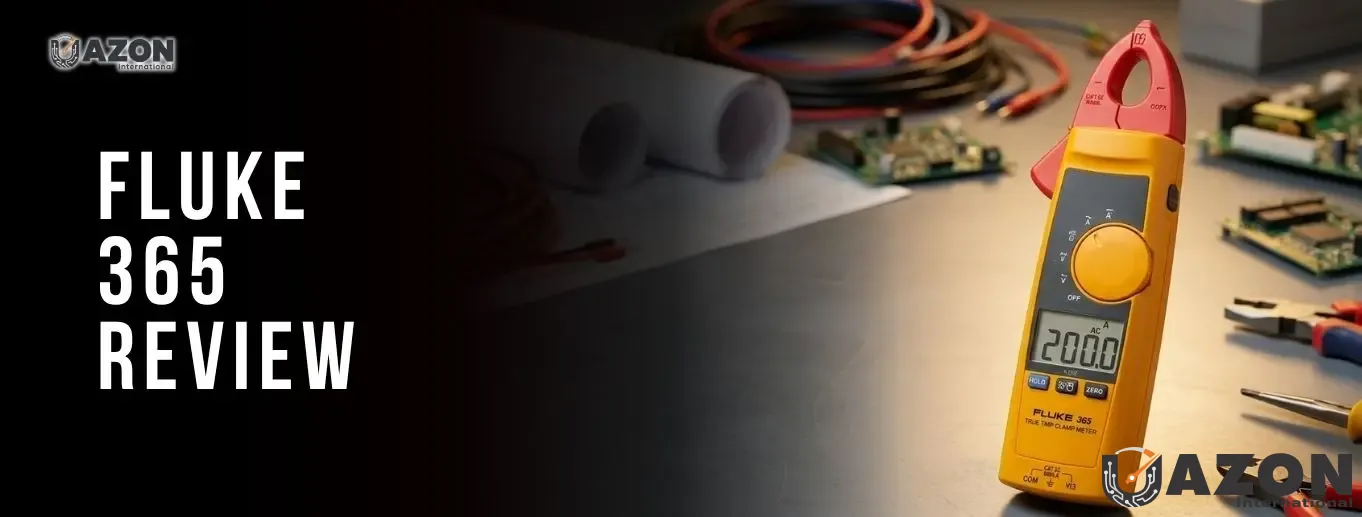
Electrical measurements inside distribution boards are often limited by physical space rather than instrument capability. Dense wiring, narrow cable routing, and crowded terminals can make it difficult to position a conventional clamp meter around a conductor. The Fluke 365 was developed to address this specific limitation by introducing a detachable clamp jaw connected to the meter body via a flexible lead.
Instead of forcing the entire meter into a restricted area, the user can position the clamp first and then read the measurement from the handheld unit. This design approach shifts the focus from simply measuring current to improving the practicality of electrical diagnostics in real installations.
The detachable jaw allows technicians to capture current measurements where access is restricted, such as inside compact control cabinets or densely wired electrical panels. This reduces the need to reposition cables or disassemble parts of an installation during measurement.
Measurement Functions and Electrical Capability
The Fluke 365 operates as a True‑RMS clamp meter, meaning it can measure electrical signals accurately even when the waveform is distorted. Modern electrical systems frequently contain nonlinear loads such as switching power supplies, electronic lighting drivers, and motor controllers, all of which can create non‑sinusoidal current patterns. True‑RMS processing allows the meter to interpret these signals more reliably.
The instrument supports both AC and DC current measurements up to 200 A. This makes it suitable for common electrical service tasks including load verification, circuit inspection, and current monitoring in building power systems.
In addition to current measurement, the meter includes voltage and resistance testing capabilities. Voltage measurements extend to 600 V AC or DC, while resistance measurement is available up to 6000 ohms. These functions allow the device to act as a compact troubleshooting tool for many day‑to‑day electrical diagnostics.
- Measuring load current in branch circuits
- Checking electrical distribution panels
- Verifying current flow in control wiring
- Performing quick electrical inspections in confined spaces
- General maintenance measurements in commercial installations
Understanding the Practical Value of a Detachable Jaw
Many clamp meters provide sufficient electrical measurement capability, but the physical form factor can limit their usability in real environments. Control panels, HVAC electrical compartments, and industrial machines frequently contain tightly packed wiring harnesses. In these scenarios, maneuvering a full‑size clamp meter around a single conductor can become difficult.
By separating the sensing jaw from the meter body, the Fluke 365 offers a practical alternative. The user can clamp onto a conductor with the lightweight jaw assembly and then hold the display unit at a comfortable viewing angle. This improves visibility of readings while reducing awkward hand positioning.
Instrumentation design often focuses on measurement precision, but ergonomics and accessibility are equally important in field environments. The detachable jaw concept represents a design decision aimed at improving usability rather than expanding measurement ranges.
Technical Specifications
| Parameter | Specification |
|---|---|
| Measurement Type | True‑RMS |
| AC Current Range | 200 A |
| DC Current Range | 200 A |
| Current Resolution | 0.1 A |
| Voltage Measurement | Up to 600 V AC/DC |
| Resistance Range | 6000 Ω |
| Wire Capacity | 17 mm |
| Safety Category | CAT III 600 V |
Applications in Electrical Maintenance
In electrical maintenance workflows, quick access to reliable measurements can significantly reduce troubleshooting time. A compact clamp meter such as the Fluke 365 can support routine inspections, load checks, and verification of circuit behavior without requiring extensive setup.
Because of its compact architecture and detachable jaw system, the instrument is particularly relevant in environments where electrical infrastructure is densely installed. Examples include building electrical distribution panels, industrial control cabinets, and service compartments in HVAC equipment.
The Fluke 365 is less about expanding measurement ranges and more about solving a practical challenge faced by electricians: accessing conductors inside confined spaces. By separating the sensing jaw from the main meter body, the design prioritizes usability and accessibility while maintaining the core measurement functions expected from a True‑RMS clamp meter.