Field Testing Insight
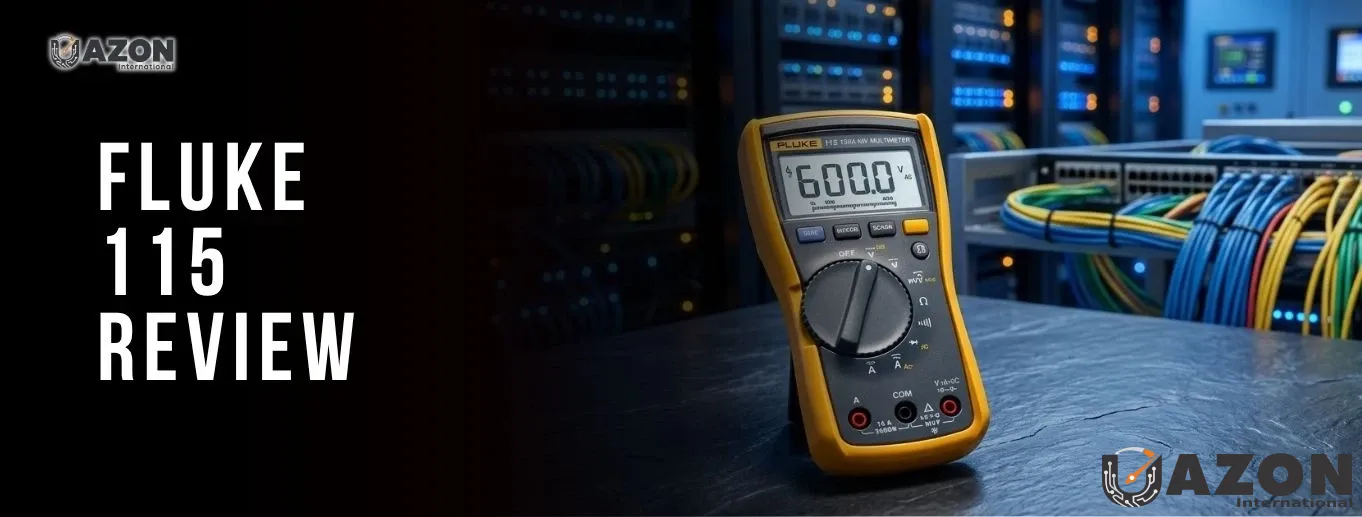
Fluke 115 in Real-World Testing: A Compact Multimeter Built for Everyday Electrical Work
A closer look at how the Fluke 115 balances portability, measurement accuracy, and practical troubleshooting features for technicians who need a dependable meter every day.
Why the Fluke 115 Still Matters
In the multimeter market, many tools compete by adding more functions, larger displays, or specialized extras. The Fluke 115 takes a different path. Its value comes from focusing on the measurements technicians actually use on a regular basis. Instead of trying to be everything at once, it concentrates on dependable electrical testing in a format that is easy to carry, simple to operate, and practical in confined workspaces.
That makes it especially relevant for field service work, general electrical maintenance, and routine troubleshooting tasks where speed and clarity matter just as much as accuracy.
Compact by Design
The Fluke 115 is made for one-handed use, which becomes important when working around panels, junction boxes, or crowded equipment layouts.
True-RMS Capability
For technicians working with modern loads, True-RMS measurement improves confidence when waveforms are not perfectly clean or linear.
Practical Measurement Set
Voltage, current, resistance, continuity, frequency, capacitance, and diode testing cover a broad range of common service scenarios.
A Better Fit for Daily Troubleshooting
One of the strengths of the Fluke 115 is that it avoids unnecessary complexity. For a technician performing voltage verification, continuity checks, current measurements, or quick component evaluation, the meter offers the core functions needed without slowing the workflow. This is often more useful than carrying a larger instrument with features that are rarely used in routine field calls.
The 6,000-count display also contributes to easier reading, while the white LED backlight helps when lighting conditions are poor. In practical use, these details can make a measurable difference during long shifts or maintenance work in dim electrical rooms.
What the Meter Covers
- AC and DC voltage measurement up to 600 V
- AC and DC current measurement up to 10 A
- Resistance and continuity testing
- Frequency measurement for signal verification
- Capacitance testing for component checks
- Diode test for basic semiconductor evaluation
- Min/Max/Average recording for changing signals
Technical Snapshot
| Specification |
Details |
| Display |
6,000-count digital display |
| Voltage Range |
Up to 600 V AC/DC |
| Current Range |
Up to 10 A, with 20 A overload for 30 seconds |
| Measurement Type |
True-RMS AC voltage and current |
| Extra Functions |
Frequency, capacitance, diode test, continuity, Min/Max/Average |
| Safety Category |
CAT III 600 V |
| Usability Features |
LED backlight, ergonomic compact housing, one-handed operation |
Who Should Consider It?
The Fluke 115 makes the most sense for users who need a reliable everyday meter rather than a highly specialized diagnostic platform. Electricians, maintenance teams, field technicians, and electronics professionals can all benefit from a tool that stays focused on accurate core measurements.
It is also a sensible choice for professionals who value portability. In many cases, a compact instrument that can be carried all day is more likely to be used consistently than a larger meter that feels excessive for routine tasks.
Final Thoughts
The Fluke 115 stands out not because it tries to do everything, but because it addresses the most common testing needs with clarity and consistency. Its compact build, True-RMS functionality, and well-rounded feature set make it a strong option for professionals who want a straightforward meter for everyday electrical and electronic work.